

Why Choose Us
Broad Market
Our company specializes in the production of power cords, connecting wires, trailer lights and trailer accessories. All products have been exported to Europe, South America, Asia and other places.
Production Capacity
Yuyao Yike Electronics Co., Ltd. was established in 2000 with a registered capital of RMB 500,000, more than 50 employees and an area of 5,000 square meters.
Advanced Equipment
The company has large-scale cable equipment, vertical injection molding machines, PVC injection molding machines, several horizontal plastic injection molding machines, soldering equipment, automatic packaging equipment, etc.
Complete Qualifications
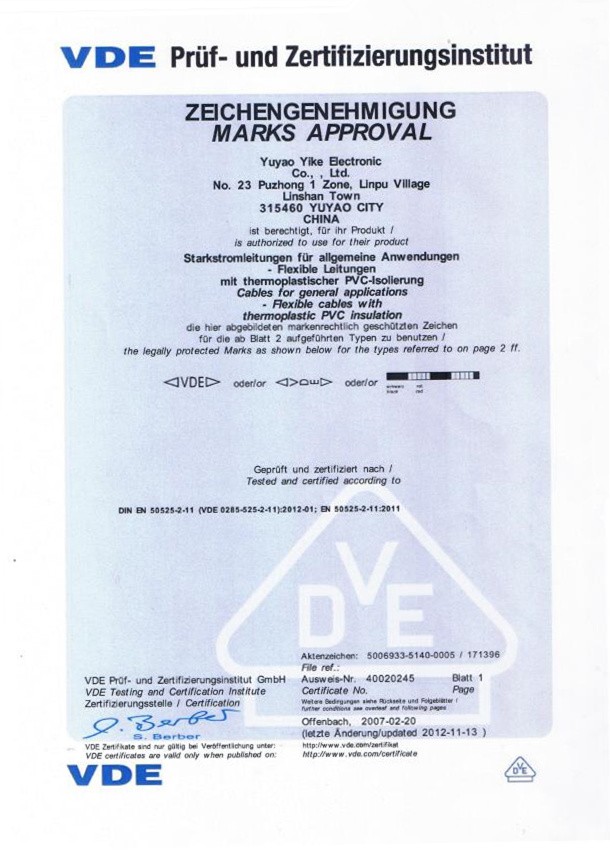
In 2005, the company passed the ISO9002 international quality system certification standard, in 2007, the company passed the UL certification, in 2007, the company passed the VDE certification, and in 2014, the company passed the CE and E-MARK certification.
What is Power Cable Plug
Power cable plugs and sockets connect devices to mains electricity to supply them with electrical power. A plug is the connector attached to an electrically-operated device, often via a cable. A socket (also known as a receptacle or outlet) is fixed in place, often on the internal walls of buildings, and is connected to an AC electrical circuit. Inserting ("plugging in") the plug into the socket allows the device to draw power from this circuit.
-

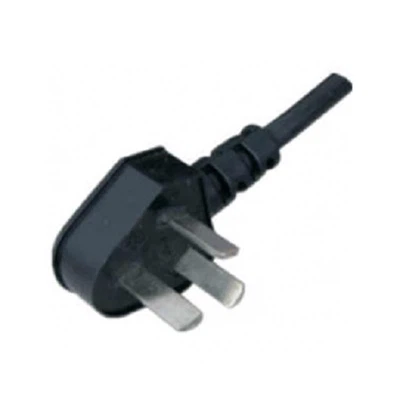
Three Pin CCC Standard Plug
CCC standard, three-pin, black plug Add to Inquiry -
Two Pin CCC Standard Plug
CCC standard, two-pin, black plug Add to Inquiry -
2 Prong Power Cord
8-shaped tail plug Add to Inquiry -
3 Prong Power Cord
Tail plug special shaped Add to Inquiry -
3 Prong AC Laptop Power Cord
Plum blossom tail plug Add to Inquiry -
European Elbow Three Pin Power Cable
European standard elbow three-pin plug Add to Inquiry -
European Straight Three Pin Power Cable
European standard straight three-pin plug Add to Inquiry -
European Straight Three Pin Power Cable Waterproof
European standard straight three-pin plug (waterproof) Add to Inquiry -
European Straight Two Pin Power Cable
European standard straight two-pin plug Add to Inquiry -
US Straight Three Pin Power Cable
American standard straight three-pin plug Add to Inquiry -
US Elbow Three Pin Power Cable
American standard elbow three-pin plug Add to Inquiry -
US Straight Two Pin Power Cable
American standard straight two-pin plug Add to Inquiry


Benefits of Power Cable Plug
As long as a power outlet is available, many devices may be readily relocated and utilised anywhere with power cable plugs, offering flexibility and mobility.
By allowing the opportunity for equipment to be used only when necessary and making it simple to disconnect power when not in use, power cable plugs help reduce energy usage and promote energy conservation.
One of the greatest advantages of an power cable plug is that it helps lower utility costs and general consumption of energy, which saves consumers money by encouraging the adoption of energy-efficient equipment and devices.
Power cable plugs can assist in minimising the environmental effects of electricity production and utilisation by encouraging the adoption of appliances that are energy-efficient and help in minimising energy waste. This can promote sustainability initiatives.
Power cable plugs make it simple and convenient to access power sources, allowing a wide range of electrical appliances and equipment to operate without the need for complex setups.
To lower the possibility of electrical risks and guarantee the secure operation of connected devices, power cable plugs have safety measures including grounding, overcurrent prevention, and insulation.
Power cable plugs are available in a variety of shapes and sizes to suit a broad spectrum of gadgets and appliances, ranging from compact electronic devices to massive domestic appliances.

How to Identify a Power Cable Plug
The number of prongs on a power cord is your first clue to identifying your cords quickly. Two Pin CCC Standard Plug are common types of power cables that feature two-pronged plugs. The non-polarized version of this cord features two straight blades of equal width, while polarized plugs feature one prong that is wider than the other.
Three Pin CCC Standard Plugs feature three-prong plugs, which are compatible with some of the most common extension cables and outlets. Three-prong plugs feature two blades of equal width and a longer, rounded ground pin. There are various other pronged connectors, such as those for appliances and electrical use. Look to their distinctive prongs for efficient identification.
What Is the Function of Power Cable Plug
Cable connectors are devices that link two or more cables together. They play a vital role in ensuring that signals are transmitted across different devices with clarity and stability. In fact, they are considered the backbone of our intricate and modern communication systems.
The primary function of cable connectors is to provide a secure and stable connection between two cables. They ensure that there is a continuous flow of signal and that the signal is not disrupted by any interference or noise. They also help to maintain the quality of the signal over the length of the cable. This is because the longer the cable, the more susceptible it is to signal loss and degradation.
There are different types of cable connectors, and each has a specific function. For example, fiber optic connectors are used to join fiber optic cables, which are used for high-speed data transfer and telecommunications networks. Audio and video connectors, on the other hand, are used to connect audio and video equipment to a source or speaker. There are also power connectors, which are used to transfer power from an electric source to a device.
Cable connectors not only ensure a secure connection, but they also help to prevent accidents. They are designed to protect cables and devices from damage, which could occur if the cables were left exposed or improperly connected. Cable connectors also help to reduce the risk of injury or electrocution, as they prevent users from coming into contact with any live wires or electrical components.
In conclusion, cable connectors play a critical role in modern communication systems. They provide a secure and stable connection between cables, which helps to maintain the quality of the signal being transmitted. They also help to prevent accidents and ensure the safety of both the cables and the users. Without cable connectors, our communication systems would not be able to function effectively.
How Do I Know if My Power Cable Plug Is Bad
Sign #1: There Is Visible Damage
Visible signs of damage, such as cracks, burns, or discoloration, are immediate red flags. Physical damage affects the outlet's functionality and significantly increases the risk of electrical shock and fire hazards.
Sign #2: There's a Burning Smell
A burning smell coming from an outlet is a serious warning sign. This odor often indicates overheating, possibly due to a faulty wiring connection or an overloaded circuit. Turn off the power to the affected area and consult a professional electrician.
Sign #3: Loose Outlet Connections
Outlets that no longer hold plugs snugly are both a nuisance and a danger. Loose connections can lead to arcing, overheating, and potentially fires. Replacing the outlet is a straightforward solution to restore safety and functionality.
Sign #4: Frequent Tripping of Circuit Breakers
If a specific outlet causes the circuit breaker to trip frequently, it's a sign that the outlet may be drawing too much power, or there could be a short circuit within the outlet itself. Both scenarios warrant a replacement.
Sign #5: Buzzing Noises
An outlet should operate silently. If you hear buzzing or other unusual sounds from an outlet, it's a sign of an electrical issue, such as loose wiring or a failing outlet component. Address these sounds right away by replacing the outlet.
Sign #6: Outdated Two-Prong Outlets
In today's three-pronged world, two-pronged outlets limit the usability of modern appliances and lack the grounding necessary for safety. Upgrading these outdated outlets is a smart move toward enhancing safety and compatibility.
Sign #7: No GFCI in Wet Areas
Ground Fault Circuit Interrupter (GFCI) outlets are a must in areas prone to moisture, like bathrooms and kitchens. These outlets protect against electrical shock by quickly cutting power if a fault is detected. If you have non-GFCI outlets in these areas, replacing them with GFCI versions is a crucial safety upgrade.
Sign #8: The Outlet Is Warm to the Touch
Outlets should not emit heat. If an outlet feels warm or hot, it's a sign of an overload or a potentially dangerous electrical fault. Such outlets need to be inspected and likely replaced by a professional.
How a Power Cable Plug Functions
Power cable plugs transmit alternating current from an AC power source, such as a wall socket, to an electrical device or appliance. They provide a low-resistance pathway for the alternating current to flow. The live wire carries 230V/120V AC from the power source to the appliance, with the current alternating periodically at 50 times per second. The neutral wire returns the current to the power source, specifically to a busbar or ground connected to the distribution box.
This setup ensures a complete current flow through the electrical system, allowing for effective utilization of electricity. The earth wire safeguards users from electric shocks by providing a path for any fault current to flow to the ground. It also triggers the fuse or circuit breaker to disconnect the current in the event of a fault.

How Do You Store Power Cable Plugs
Start your new life here. Break the back of this box, and you are well on your way to an organized tech nirvana. Untangle and sort your cables into matching piles. Use cable ties or rubber bands to roll them up neatly. Place your cords into boxes labeled by type. I repurposed old circular plastic takeout containers, as they are the right shape for coiled up cables. To level up your organization, write what each cord is on a white sticky label and wrap them around the cable.
Many power cable plugs come with a box that includes accessories, a manual, and maybe a setup code that you are definitely going to need later but will never be able to find. If you have the space, I highly recommend keeping the original box with all that stuff still inside. Not only does this make it easier for you to find that accessory or QR code, it also makes it easier to pass on, donate, or sell the gadget when you no longer need it. Devices with the original boxes and accessories always command higher fees, and having the original manuals and accessories makes life much easier for the next owner.
If space is tight, break down the boxes or decant the contents into smaller containers and label them. If you don’t want to keep this stuff, or worry you won't be able to dig it up again, take a photo of the box with the product name and a pic of the QR code or any other pertinent info. If they sit together in your camera roll, it will be easier to find them later. Scanning a decent photo of the QR code works just as well as the original code, but make sure your pic is in focus.
Types of Power Cable Plugs
You can figure out what type of plug you have by looking at the prongs and the screws on it. There are three major types of straight blade power cable plugs: self-connecting, terminal screw and three-prong.
Self-connecting plugs snap on easily and are seen on appliances like lamps.
● These standard two-prong plugs aren't usually polarized.
● They're the easiest plugs to replace.
● The installation is straightforward even if you use a polarized self-connecting plug.
● If you don't see any screws on the plug, it's likely this type.
Terminal screw plugs have screws on the prongs.
● These plugs are usually polarized.
● They're more complicated to replace than non-polarized self-connecting plugs.
● If the face of the plug has screws between the plug tines or prongs, it's a terminal screw plug.
Three-prong plugs are used for appliances that pull more power than minor ones do.
● Three-prong plugs are polarized.
● These plugs have a big prong, a smaller one and a rounded grounding prong.
● The round prong is for safety purposes, so never remove or change it to fit a different outlet.
Our Factory
Yuyao Yike Electronics Co., Ltd. was established in 2000. In 2005, the company passed the ISO9002 international quality system certification standard, in 2007, the company passed the UL certification, in 2007, the company passed the VDE certification, and in 2014, the company passed the CE and E-MARK certification. It is a company specializing in the production of trailer lights, trailer accessories, connecting wires, and power cords in Yuyao, Ningbo.
Production Equipment


Our Certificate


Ultimate FAQ Guide to Power Cable Plug
We're professional power cable plug manufacturers and suppliers in China. Please feel free to buy high-grade power cable plug for sale here from our factory. All customized products are with high quality and competitive price.
kc straight two pin wire cable, flatbed trailer winch, japanese three pin plug